Back the person, not just the startup.
DF3F issues income-share notes for founders through a platform issuer SPV and services them on-chain. Founders get capital without dilution or a personal guarantee. Investors hold a capped claim on income above a hurdle.
- Instrument
- Income-share note, one series per founder
- Issuer
- Platform SPV with an independent trustee
- Investors
- Professional clients only, no US persons
- Settlement
- USDC on Arbitrum, in testing

A share of income above the hurdle. Never more than the cap.
Each note fixes four numbers before any money moves: the share of income, the annual hurdle, the payment cap and the term. Payments follow income and are trued up once a year. In a year below the hurdle, nothing is due.
payment = share × max(0, income - hurdle) until total payments reach the cap
Try your own numbers in the playground| Year 1 | Year 2 | Year 3 | Year 4 | Year 5 | |
|---|---|---|---|---|---|
| Income | $140k | $190k | $45k | $230k | $280k |
| Paid | $9k | $14k | $0 | $18k | $23k |
How it works
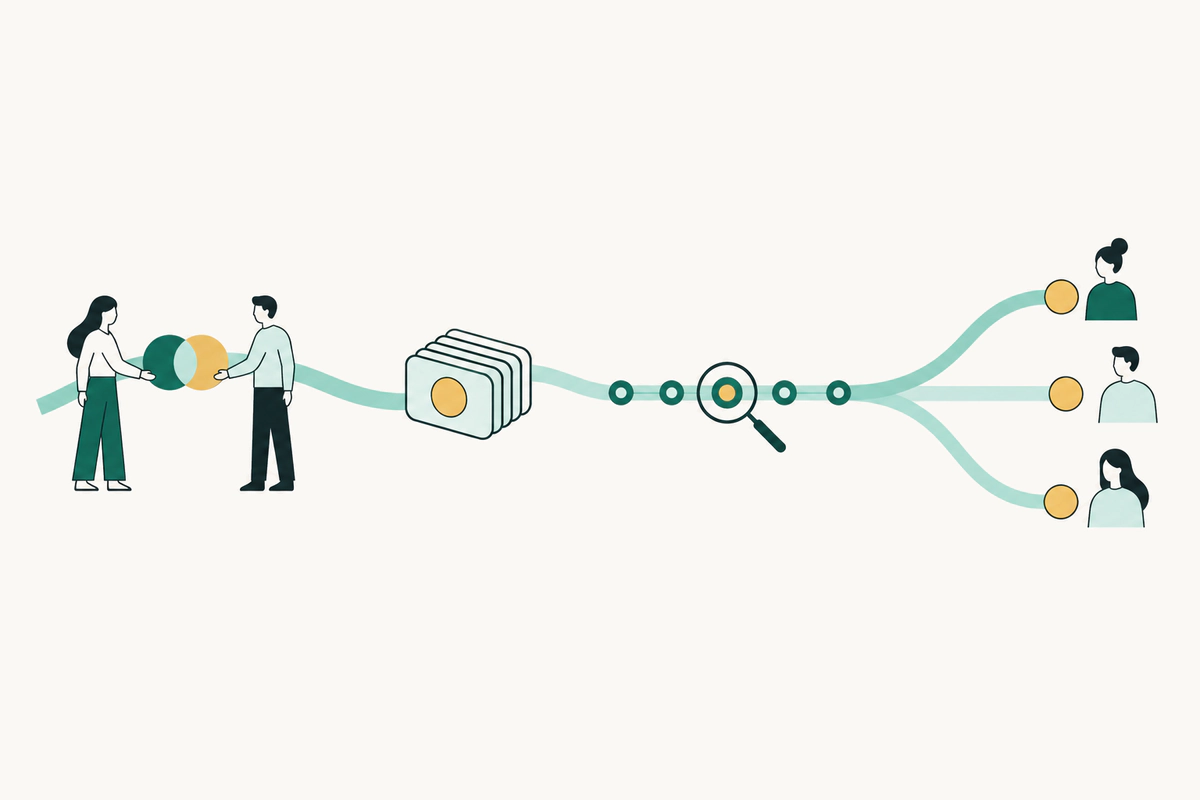
One founder, one note series, four stages. The terms are set before the raise and cannot change after issue.
-
Underwriting sets the terms
An underwriting memo fixes the share of income, the hurdle, the payment cap and the term for one founder.
-
The issuer SPV issues a note series
Professional investors commit USDC during the raise, and each position is recorded on Arbitrum. If the raise misses its minimum, every commitment is refunded.
-
The servicer checks income each period
It verifies the founder's income and posts the payment due above the hurdle. The engine accepts only what fits under the cap.
-
Holders are paid after a dispute window
The trustee can reverse errors inside the window, then holders are paid pro rata. The note ends at the cap, at the end of the term, on a buyout, or on death or disability.
For founders
Capital now, paid back only from income above the hurdle. No dilution, no personal guarantee, no fixed schedule.
- Capital for your company or your personal runway. Use it to build, or to live while you build.
- Pay only above the hurdle. In a year below it, nothing is due.
- A cap of 1.5-3x. Total payments can never exceed the multiple of the amount raised set in your terms.
- A hardship pause extends the term. A hard stretch moves the end date instead of adding penalties.
- At most 25% across all notes. The shares of all your notes together never exceed 25%, so you keep most of what you earn.
- Nothing personal on-chain. Your name, documents and income reports stay off the ledger. The chain holds only commitments.
- Consumer protections for personal runway. An APR ceiling, 14 days to withdraw, and an early repayment fee of at most 1%.
For investors
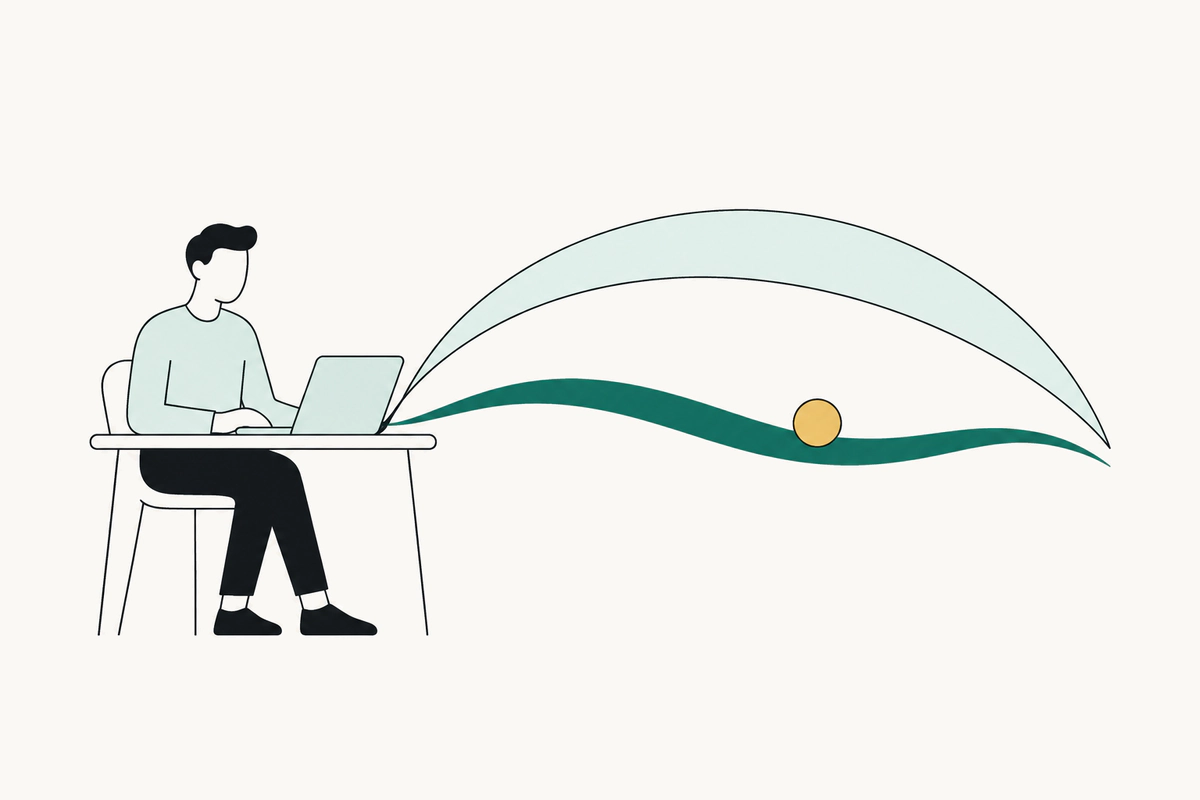
A capped claim on a founder's income above the hurdle, recorded in an on-chain note register and serviced in the open.
- Professional clients only. The pilot is open only to professional clients, and never to US persons.
- Exposure to human capital. Payments follow a person's earned income, not a company's exit.
- An on-chain note register. Positions, payments and caps are public, and servicing is transparent.
- Independent trustee and a named backup servicer. The trustee can reverse errors and replace the servicer. The backup servicer takes over after 60 days of silence.
- Disputes before money moves. Every payment waits out a dispute window before it reaches holders.
- No trading in the pilot. Voluntary transfers stay off until a secondary market is legally open.
Notes are illiquid and high risk. Payments depend on one person's income, and investors can lose some or all of their principal.

Engine and trust
Contracts hold the terms, the raise escrow and every payment. The operator runs servicing but cannot change terms or take funds.
Contracts
- Compliance registry
- Who may hold positions: KYC expiry, professional status, country.
- Note positions ERC-721
- One token per investor position. Together they form the note register.
- Series
- One per founder: the raise escrow, period payments, the dispute window and claims.
- Factory
- Creates a series only within the protocol guardrails.
- Income vault optional
- Splits income at source, with the founder's consent.
Invariants
- Payments never exceed the cap.
- Consumer notes never exceed the APR ceiling.
- Claims never exceed released payments.
- The operator cannot change terms or take funds.
- A backup servicer takes over after 60 days of silence.
Network
Arbitrum One, with Arbitrum Sepolia as the public testnet. Chosen for native USDC and an exit window for users before regular upgrades.
Testing
305 tests pass with 100% line and branch coverage of the contracts: unit, fuzz, ten invariants, all 27 reference-model scenarios replayed on-chain, and an end-to-end run on a local chain. An independent review with Codex CLI added 31 tests and led to four engine fixes; its other findings are kept by design and documented. Not audited yet.
Guardrails in code
The factory refuses to create a series outside these limits. They protect founders from abusive terms and keep notes comparable for investors.
| Guardrail | Limit |
|---|---|
| Share of incomeTaken only from income above the hurdle | 5-20% |
| Payment capTotal payments as a multiple of principal | 1.5-3x |
| TermLonger only through hardship pauses | 3-10 years |
| Total share per personAcross all notes of one founder | At most 25% |
| Hardship pausesEach one extends the term by a period | At most 8 periods |
| Dispute windowBefore a payment reaches holders | 7-30 days |
| Consumer APR ceilingSet per country when the money is personal runway | 10% by default |
Roadmap
Targets, not commitments.
-
Q4 2026 Now
Legal structure and demand
Structural, tax and sanctions memos, pilot terms, and talks with founders and anchor investors, while the engine is built and tested.
-
H1 2027
Entities and first cohort
The operating company in ADGM and the issuer SPV. A first cohort of notes through a licensed arranger.
-
H2 2027
Audits and on-chain cohort
Two independent audits of the engine, then a cohort serviced on-chain with limits.
-
2028
FSRA licence and closed secondary
A licence from the FSRA, the ADGM regulator, then a closed secondary market for professional clients.
Questions
Something else? Write to timur@gadzhiev.com.
Is this a loan?
Not in the usual sense. There is no fixed repayment schedule and no personal guarantee: the founder pays a share of income above the hurdle, and nothing in a year below it. When the money is personal runway, the note runs in consumer mode with consumer credit protections: an APR ceiling, 14 days to withdraw, and an early repayment fee of at most 1%.
Who can invest?
In the pilot, only professional clients, through a licensed intermediary. The notes are not available to US persons. Nothing on this site is an offer.
What if the founder earns nothing?
Then nothing is due. Payments start only above the hurdle, and a proven hardship pause extends the term instead of adding penalties. Investors carry this risk and can lose some or all of their principal.
What stops a founder hiding income?
The note terms define income broadly: salary, dividends and the founder's share of profit in their own company, payments to related parties for the founder's work, and income earned in the term but paid later. The servicer verifies income every period, and a missing report counts as income at the trailing twelve-month level, not as zero.
Can I sell my position?
Not in the pilot. Voluntary transfers stay off until a secondary market is legally open and at least two payment periods are verified. Lost keys, inheritance and court orders are handled by a transfer agent after a public seven-day notice, which the trustee can veto.
Why a blockchain?
It is the note register and the settlement layer, not a trading venue. Positions, payments, disputes and caps are public and verifiable, and the engine keeps working if the operator disappears: a named backup servicer takes over after 60 days of silence.
Where is DF3F based?
DF3F is being set up in Abu Dhabi Global Market (ADGM), Abu Dhabi, and the founder is relocating to the UAE. Until DF3F holds its own licence, any offering runs through a licensed arranger.